


A few days before the grand departure of the Route du Rhum - Destination Guadeloupe, we went to meet Pep Costa, the young 27-year-old Catalan skipper who is preparing to take on this mythical challenge at the helm of the Class40 VSF Sports.
With an unconventional background combining physics and mathematics studies in New York and solid experience on the Mini 6.50 and Figaro circuits, this meticulous skipper, now based in Lorient, approaches his first participation with humility and ambition. From his precise physical preparation to mental management while sailing solo, and including his race objectives, Pep Costa shares his state of mind before setting off across the Atlantic.
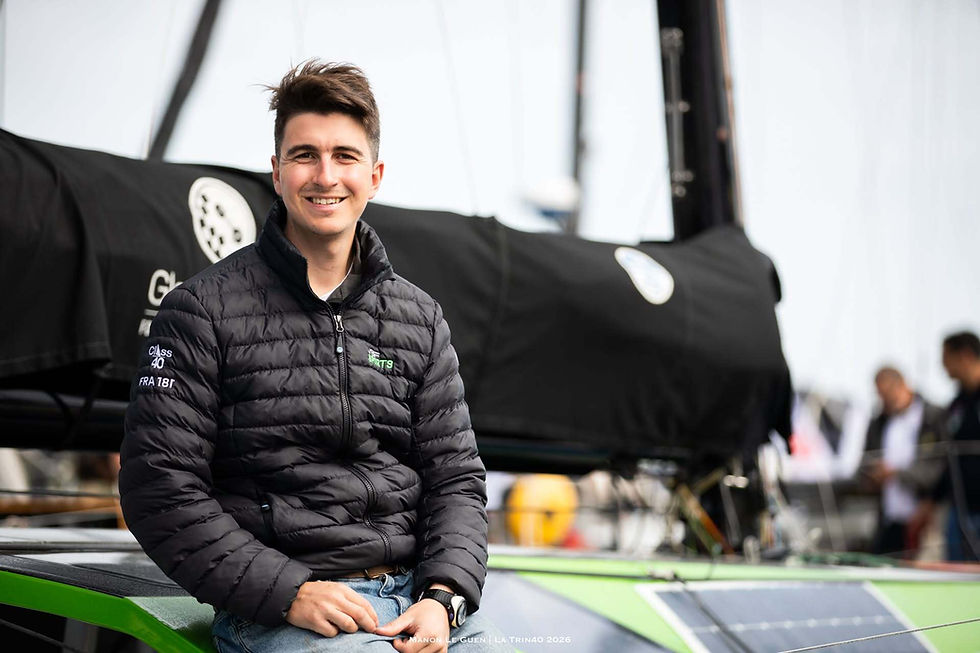
Question No. 1: For those who are discovering you, could you introduce yourself and trace your journey, from your beginnings to your arrival in offshore racing?
My name is Pep Costa, I'm 27 years old and I was born in Barcelona. Sailing came into my life very early, through my family, but I think offshore racing really started to capture my imagination when I was a child. I was eight years old at the start of the first Barcelona World Race and I still remember the fascination I felt for those sailors capable of circumnavigating the globe.
My path hasn't been entirely linear, though. I first went to study in New York, where I trained in physics and mathematics. This experience was very important to me: leaving at a young age, far from my family and familiar surroundings, taught me to be independent and to seize opportunities, even when you don't know exactly where they will lead.
Then, the sea gradually reclaimed its place. I went through the Mini 6.50, then the Figaro, with three participations in La Solitaire du Figaro. These are two extraordinary, very different schools that taught me self-reliance, precision, endurance and above all, humility.
I settled in Lorient several years ago, and it's where I truly built my life as a professional sailor. I've sailed extensively, solo, double-handed, and with a crew. I also had the opportunity, in 2024, to join the routing team for SVR-Lazartigue during the Arkéa Ultim Challenge-Brest. Working alongside extremely experienced people taught me a great deal about meteorology, but also about how to structure a decision.
Then VSF Sports chose me to lead their Class40 program for three seasons. This changed a lot of things: for the first time, I had time ahead of me, a structured project, a team and a very high-performance boat with which to build something over several years.
This Route du Rhum is a new chapter. It will be my first Route du Rhum, but my seventh transatlantic race. So I'm not going into the unknown. I still know everything I have to learn, but I feel comfortable and ready to see how far I can go.
Question No. 2: With just a few days to go before the big departure, how are you feeling and how are you approaching this new transatlantic crossing?
I feel great, and above all very calm. I really want to be there.
The Route du Rhum - Destination Guadeloupe is a race I've dreamed about for a long time. I grew up with some of its images: Franck Cammas, Roland Jourdain, François Gabart, Alex Pella, Aymeric Chapellier, and that incredible finish between Francis Joyon and François Gabart around Guadeloupe in 2018. Until now, I've always watched this story from the outside. This time, I'm going to be a part of it, and that's bound to be special.
At the same time, the closer the departure date gets, the less I'm caught up in the dream. Preparation has taken over. We've spent months sailing, working on VSF Sports, understanding the boat, making it reliable, and progressing with it. Today, I truly feel we've done everything necessary to arrive ready.
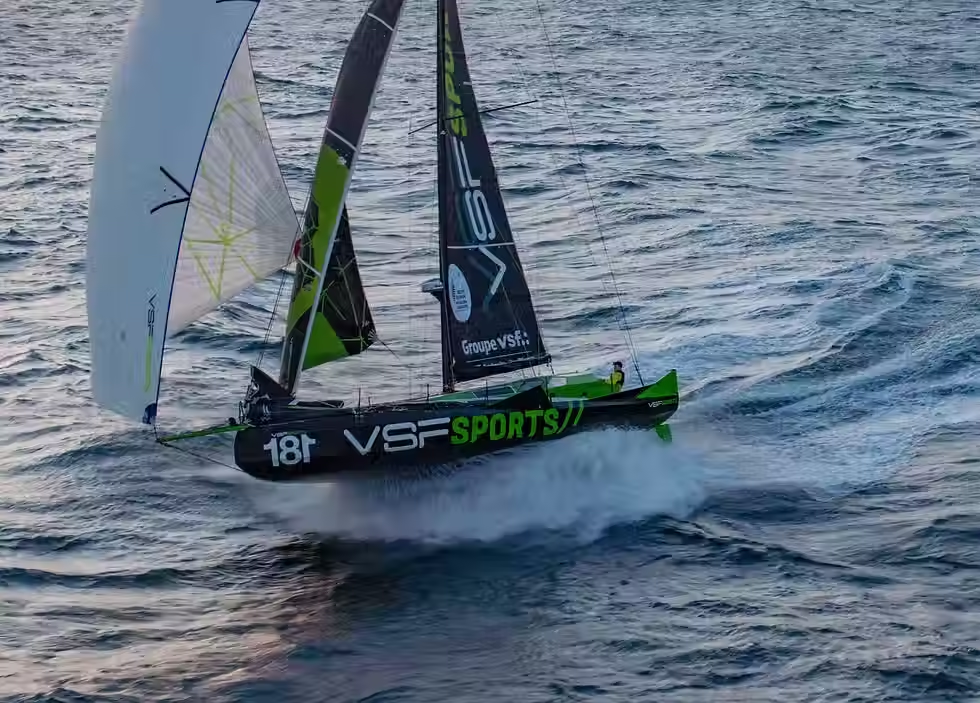
This will be my first Route du Rhum - Destination Guadeloupe, but not my first Atlantic crossing. I know what it's like to spend several days alone at sea, the fatigue, the decisions to be made, the moments when things don't go as planned. What I will discover, however, is this unique race, its start in Saint-Malo, and the incredible density of competitors in the Class40 fleet.
I want to test myself against that. To be in the right group, to sail alongside very good sailors, and to see what I'm capable of in that context. I don't feel overconfident, but I feel ready.
Question No. 3: In concrete terms, how did your physical and mental preparation for this Rhum go?
Physical preparation is part of my daily routine all year round. It simply evolves according to the calendar. In winter, when there's less sailing, I can do more gym work. During the season, with races and training on the water, the sessions have to be adapted, but I continue to train several times a week.
I mainly train indoors with a coach, supplemented by cycling and running. On a Class40, you have to be able to repeat maneuvers, sometimes in rough seas and with very little sleep. So the goal isn't just to be physically strong: you have to be resilient, remain efficient when fatigue sets in, and above all, avoid injuries.
I also work with a Spanish mental coach whom I see regularly via video conference. He helps me organize my thoughts, anticipate certain situations, and establish decision-making routines.
When sailing solo, clear thinking is probably one of the most important things. You might be tired, have a technical problem, or go through a rough patch, but you have to keep making good decisions. I learned a lot about this during my routing experience on the Arkéa Ultim Challenge-Brest: even the best have doubts. The important thing is to gather all the available information, make a choice, and then move forward with that decision.
Finally, there's obviously all the preparation done at sea. For the past two seasons, every sail, every race, and every problem encountered with VSF Sports has allowed us to get to know the boat better. Today, I'm really starting to feel it: its reactions, its sounds, the moments when we can push harder and those when, on the contrary, we need to preserve the boat.
This knowledge is also part of the preparation.
Question No. 4: What are your objectives for your first Route du Rhum – Destination Guadeloupe?
My goal is to have a great race from start to finish.
Of course, I want to achieve the best possible ranking. We have a high-performing boat, we've worked hard, and this season's results show that we can compete with the best. So I would be dishonest to say that the ranking doesn't matter.
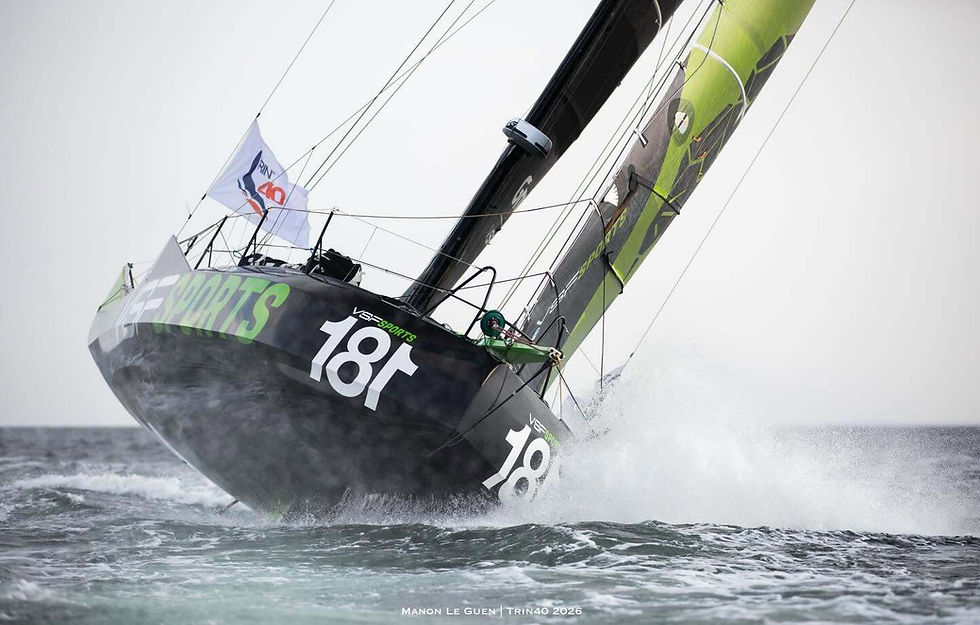
But I also know that a Route du Rhum race cannot be reduced to a single number.
My main goal is to sail cleanly, make as few mistakes as possible, stay in the leading group, and keep the boat performing at its best. The first few days will likely be very demanding, with heavy traffic, rough seas, strong winds, and little sleep. Unnecessary errors will be crucial. The race won't be won in the first few hours, but it can certainly become much more challenging then.
Then, we'll need to stay focused right to the end. In the Route du Rhum, even the finish around Guadeloupe can completely reshuffle the deck. You can build a lead over several days in the middle of the Atlantic and lose a huge amount in just a few hours.
I'd like to arrive in Pointe-à-Pitre with the feeling that I've sailed well, made the right decisions, and stayed focused on my race from start to finish. There are times at sea when everything seems to fall into place naturally: the boat sails well, the decisions are made at the right moment, the course is consistent. If I can find that "flow" during the race, I'll know I've done something right.
And then, obviously, I'll look at the rankings!
Question #5: Do you have a final message to share with those who follow and support your project?
First of all, simply thank you.
A project like this exists because many people decide to believe in it and commit to it. There's the VSF group, of course, which gave me this opportunity and the resources to build a real, multi-season project. There's the whole team around the boat, those who work every day to ensure I can start in the best possible conditions, our partners, and everyone who has supported us from the beginning.
When I'm alone on the Atlantic, I'll obviously be the only one on board. But all this work and all these people will go with me in a little way.
My main hope is that those who support us will enjoy experiencing this Route du Rhum with us. It will begin in Saint-Malo, with everything that the village and the start represent, then there will be the crossing and that legendary finish in Guadeloupe.
For me, it's a huge opportunity to be at the starting line. So thank you for being here, for following us and for being part of the adventure.