top of page

It is the star of the show. It fascinates everyone, it intrigues them; it is photographed, analyzed, and dissected, most of all by the tens of thousands of visitors to the race village in Saint . Launched last spring, the Maxi Edmond de Rothschild—also known as Gitana 18—will make its first transatlantic race ever with Charles Caudrelier at the helm. Above all, it offers a first look into the future of the Ultim class. We took a guided tour last Saturday.
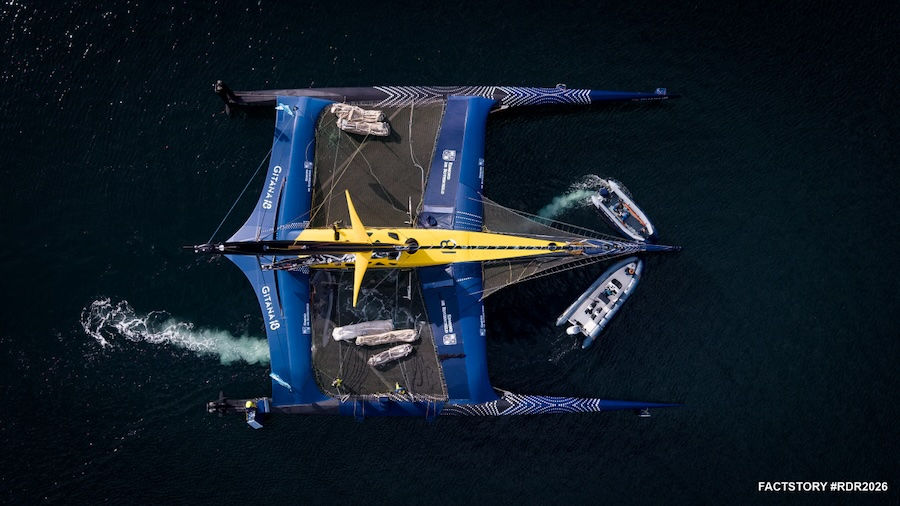

Le Maxi Edmond de Rothschild, Gitana 18 @ Facstory

That Saturday, rain poured down on the basin, yet it did nothing to dampen the enthusiasm of the crowd gathered behind the barriers. The magnetic draw of this latest Ultim—built and launched in 2026—defied the weather. Designed by Guillaume Verdier and his tight knit group of clever collaborators, the giant tri immediately catches the eye with the fluidity of its lines, the technical refinement of its visible components—crafted from carbon and titanium—and, of course, its striking livery.


The graphic design was commissioned by Ariane de Rothschild and entrusted to artists Florian and Michaël Quistrebert. Brought to life by the Jean-Baptiste Epron, the thousands of dots adorning the hulls and sails depict an expanding wave, composed of ripples and wave faces. "None of them are stickers; everything was painted using stencils, and each circle was subsequently sanded down to ensure a perfectly smooth surface on the hulls," explains the clearly enthusiastic Cyril Dardashti, the team manager.

Standing on the trampolines, Cyril rattles off a few figures that are nothing short of dizzying. It took 200,000 man-hours to bring this new trimaran to life—a boat almost entirely built within the autoclave at the CDK yard. It’s the product of 50,000 hours of design work—"double the time spent on Gitana 17"—a solid knowledge base that the team drew upon, even while opting for a clean sheet of papr  approach. Like its predecessor, Gitana 18 is a disruptor; everything was re-evaluated four years ago when the initial design loops began. Features include a dynamicall controlled bending mast, retractable Y-shaped foils, a tilting daggerboard, U-shaped rudders designed to limitcavitation, and a structural coachroof that acts as an extension of the hull. "Six patents have been filed for these technical components," notes Cyril. As for the autopilot—developed using a predictive logic in collaboration with the young company WDS We.Deploy(science)—it is proprietary and will not be sold to any other Ultim vessel in the future.


Easily accessible via side doors, the bright yellow cockpit extends from the central hull between the two crossbeams and serves as part of the platform’s anti-torsion structure. While the exterior is a striking yellow, the interior is finished in carbon black; it is surprisingly spacious, with numerous windows offering a clear view of the outside. The maneuvering area—studded with screens—and the watch station have been swapped compared to Gitana 17. Charles will rest in the aft section, "to minimize visual clutter and reduce the number of screens," the skipper explains.

Between these two zones, small electric steering wheels allow for manual control of the boat’s course. Further forward, additional wheels are used to adjust the angles of the flaps on the daggerboard and other appendages. Controls for mast rake and mainsail easing remain within easy reach, mounted on the overhead. The central "coffee grinder" pedestal operates four winches and also generates the power to run the 44 hydraulic cylinders on board. "We only had 17 on the previous boat!" notes the team manager, who makes no secret of the vessel’s increased mass: "The platform itself is actually lighter than G17’s, but the size of the appendages is on a completely different scale—which inevitably adds weight. That’s a deliberate choice."
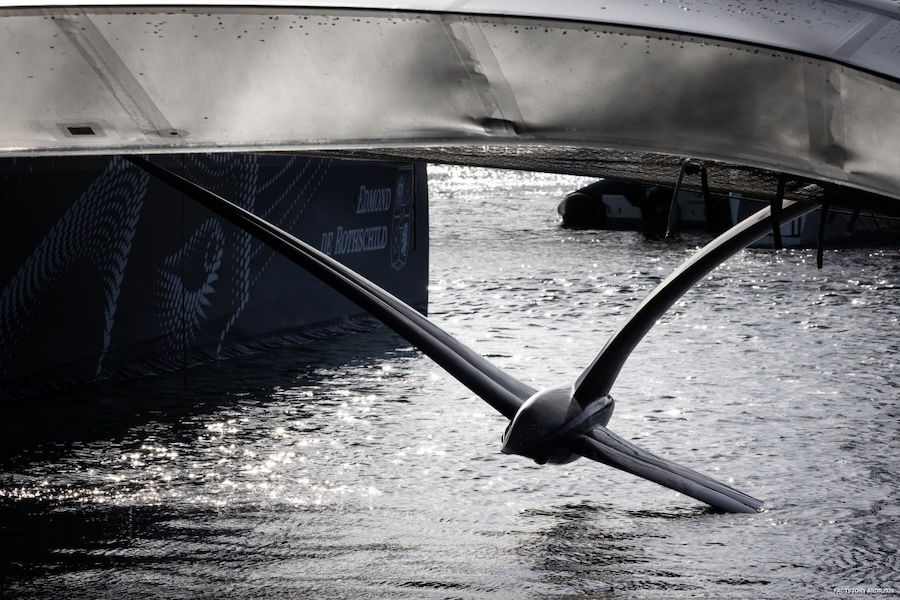

Le Maxi Edmond de Rothschild, Gitana 18 @ Vincent Olivaud / Facstory


Easily accessible via side doors, the bright yellow cockpit extends from the central hull between the two crossbeams and serves as part of the platform’s anti-torsion structure. While the exterior is a striking yellow, the interior is finished in carbon black; it is surprisingly spacious, with numerous windows offering a clear view of the outside. The maneuvering area—studded with screens—and the watch station have been swapped compared to Gitana 17. Charles will rest in the aft section, "to minimize visual clutter and reduce the number of screens," the skipper explains.

Between these two zones, small electric steering wheels allow for manual control of the boat’s course. Further forward, additional wheels are used to adjust the angles of the flaps on the daggerboard and other appendages. Controls for mast rake and mainsail easing remain within easy reach, mounted on the overhead. The central "coffee grinder" pedestal operates four winches and also generates the power to run the 44 hydraulic cylinders on board. "We only had 17 on the previous boat!" notes the team manager, who makes no secret of the vessel’s increased mass: "The platform itself is actually lighter than G17’s, but the size of the appendages is on a completely different scale—which inevitably adds weight. That’s a deliberate choice."
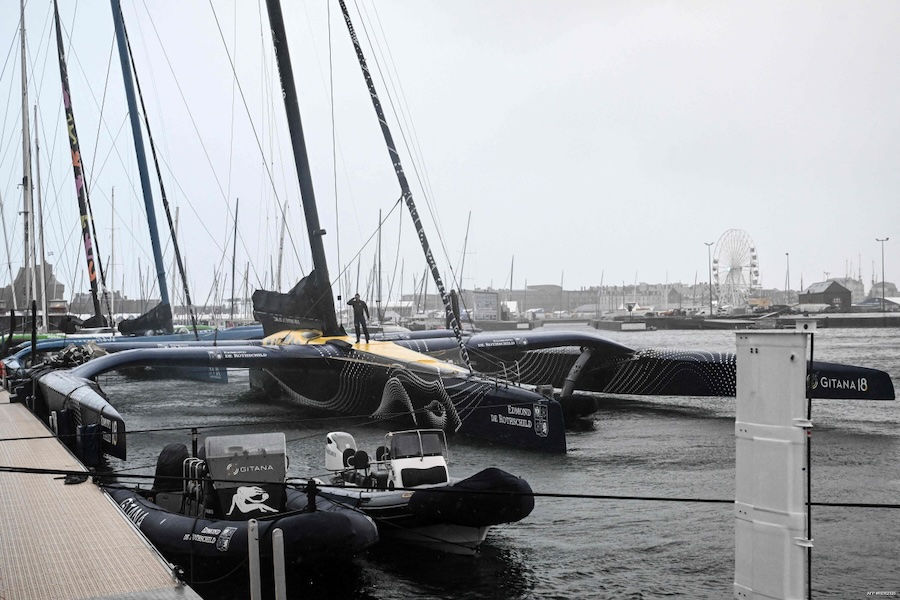


Le Maxi Edmond de Rothschild, Gitana 18 @ Sébastien Salom-Gomis


Oct 29
4 min read

It is the star of the show. It fascinates everyone, it intrigues them; it is photographed, analyzed, and dissected, most of all by the tens of thousands of visitors to the race village in Saint . Launched last spring, the Maxi Edmond de Rothschild—also known as Gitana 18—will make its first transatlantic race ever with Charles Caudrelier at the helm. Above all, it offers a first look into the future of the Ultim class. We took a guided tour last Saturday.


Le Maxi Edmond de Rothschild, Gitana 18 @ Facstory

That Saturday, rain poured down on the basin, yet it did nothing to dampen the enthusiasm of the crowd gathered behind the barriers. The magnetic draw of this latest Ultim—built and launched in 2026—defied the weather. Designed by Guillaume Verdier and his tight knit group of clever collaborators, the giant tri immediately catches the eye with the fluidity of its lines, the technical refinement of its visible components—crafted from carbon and titanium—and, of course, its striking livery.


The graphic design was commissioned by Ariane de Rothschild and entrusted to artists Florian and Michaël Quistrebert. Brought to life by the Jean-Baptiste Epron, the thousands of dots adorning the hulls and sails depict an expanding wave, composed of ripples and wave faces. "None of them are stickers; everything was painted using stencils, and each circle was subsequently sanded down to ensure a perfectly smooth surface on the hulls," explains the clearly enthusiastic Cyril Dardashti, the team manager.

Standing on the trampolines, Cyril rattles off a few figures that are nothing short of dizzying. It took 200,000 man-hours to bring this new trimaran to life—a boat almost entirely built within the autoclave at the CDK yard. It’s the product of 50,000 hours of design work—"double the time spent on Gitana 17"—a solid knowledge base that the team drew upon, even while opting for a clean sheet of papr  approach. Like its predecessor, Gitana 18 is a disruptor; everything was re-evaluated four years ago when the initial design loops began. Features include a dynamicall controlled bending mast, retractable Y-shaped foils, a tilting daggerboard, U-shaped rudders designed to limitcavitation, and a structural coachroof that acts as an extension of the hull. "Six patents have been filed for these technical components," notes Cyril. As for the autopilot—developed using a predictive logic in collaboration with the young company WDS We.Deploy(science)—it is proprietary and will not be sold to any other Ultim vessel in the future.


Easily accessible via side doors, the bright yellow cockpit extends from the central hull between the two crossbeams and serves as part of the platform’s anti-torsion structure. While the exterior is a striking yellow, the interior is finished in carbon black; it is surprisingly spacious, with numerous windows offering a clear view of the outside. The maneuvering area—studded with screens—and the watch station have been swapped compared to Gitana 17. Charles will rest in the aft section, "to minimize visual clutter and reduce the number of screens," the skipper explains.

Between these two zones, small electric steering wheels allow for manual control of the boat’s course. Further forward, additional wheels are used to adjust the angles of the flaps on the daggerboard and other appendages. Controls for mast rake and mainsail easing remain within easy reach, mounted on the overhead. The central "coffee grinder" pedestal operates four winches and also generates the power to run the 44 hydraulic cylinders on board. "We only had 17 on the previous boat!" notes the team manager, who makes no secret of the vessel’s increased mass: "The platform itself is actually lighter than G17’s, but the size of the appendages is on a completely different scale—which inevitably adds weight. That’s a deliberate choice."


Le Maxi Edmond de Rothschild, Gitana 18 @ Vincent Olivaud / Facstory


Easily accessible via side doors, the bright yellow cockpit extends from the central hull between the two crossbeams and serves as part of the platform’s anti-torsion structure. While the exterior is a striking yellow, the interior is finished in carbon black; it is surprisingly spacious, with numerous windows offering a clear view of the outside. The maneuvering area—studded with screens—and the watch station have been swapped compared to Gitana 17. Charles will rest in the aft section, "to minimize visual clutter and reduce the number of screens," the skipper explains.

Between these two zones, small electric steering wheels allow for manual control of the boat’s course. Further forward, additional wheels are used to adjust the angles of the flaps on the daggerboard and other appendages. Controls for mast rake and mainsail easing remain within easy reach, mounted on the overhead. The central "coffee grinder" pedestal operates four winches and also generates the power to run the 44 hydraulic cylinders on board. "We only had 17 on the previous boat!" notes the team manager, who makes no secret of the vessel’s increased mass: "The platform itself is actually lighter than G17’s, but the size of the appendages is on a completely different scale—which inevitably adds weight. That’s a deliberate choice."


Le Maxi Edmond de Rothschild, Gitana 18 @ Sébastien Salom-Gomis


bottom of page