

This is a territory and its inhabitants inextricably linked to the history of the Route du Rhum – Destination Guadeloupe. Since 1978, the race has always finished on this Caribbean island. Over the years, the people of Guadeloupe have forged a strong connection with the event, passionately celebrating each arrival, from the first to the last competitor. This year again, the welcome promises to be exceptional, with a multitude of initiatives to celebrate the sailors, their achievements, and their magnificent playground, from the Atlantic to the Caribbean Sea.
It's still a distant horizon for the competitors in the Route du Rhum - Destination Guadeloupe. That moment when they'll see land before them, Guadeloupe appearing at the end of their bows. Yet, they all know there's still much to do. Rounding the island is particularly tricky: they have to pass the English Channel, tack at the Basse-Terre buoy, cross the Saintes Channel... They must resist currents, wind shadows, the whims of the weather, and the gnawing fatigue. They'll have to hold on, throw their last reserves of energy into the battle, and maintain maximum composure and concentration before finally crossing the finish line. At last, they can take a deep breath, feel the Caribbean warmth, and savor their return to land.
All will thus contribute to writing the rich history that links the Route du Rhum to Guadeloupe since 1978. The people of Guadeloupe have been at the forefront of the great transformations of offshore racing: the emergence of multihulls, the craze for Orma, foils on IMOCA, the new era of Ultim… They too have experienced the strongest emotions, the founding victory of Mike Birch (1978), the triumphant arrival of Florence Arthaud (1990), the double of Laurent Bourgnon (1994, 1998), the Joyon-Gabart duel (2018), the record of Charles Caudrelier (2022)... Exploits that have marked history, stirred hearts and inspired vocations on both sides of the Atlantic.
“This race is the dream of all of us ,” enthuses Victor Jean-Noël, president of the Guadeloupe Sailing League. “ It is the dream of those who wish to sail, of those who admire these women and men who cross the Atlantic, of those who say to themselves: ‘why not me?’” Ulysse Pozzoli (Earwen, Class40) is one of these Guadeloupeans who will be on the starting line: “I grew up with all these great sailors and, since then, my goal has always been to participate in the Route du Rhum ,” he says.
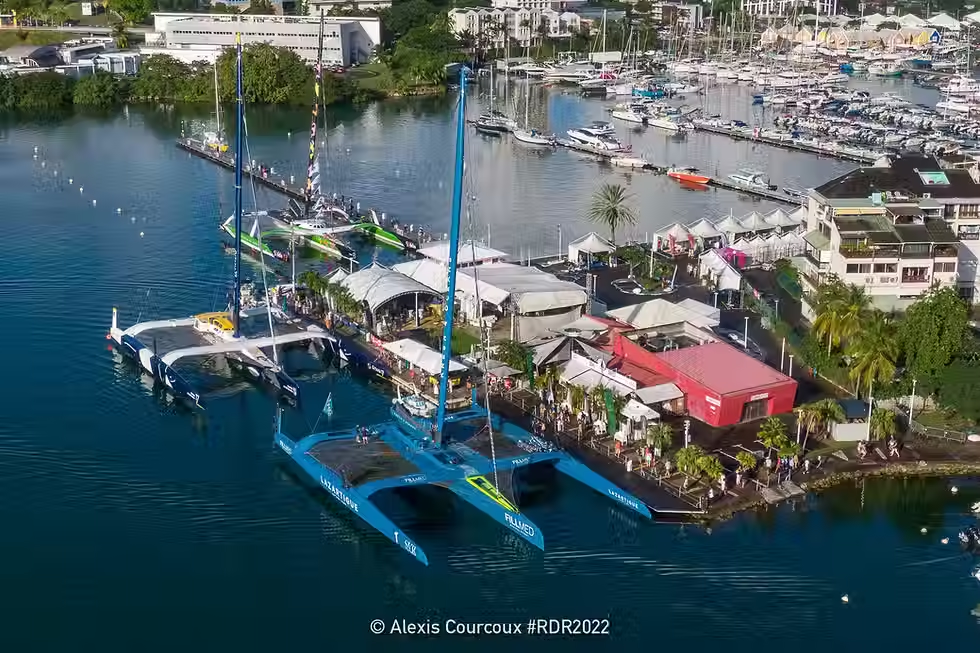
"A moment of celebration and sharing that brings people together"
“The Route du Rhum is the greatest of all offshore races,” Ulysse continues. “ It’s a time for celebration and sharing that brings people together. We all have immense admiration and respect for these sailors who persevere in this incredible adventure.” By warmly and passionately welcoming these men and women of the sea, the people of Guadeloupe have, over time, forged a strong connection with offshore racing. And gradually, many of them have taken the plunge and become active participants in the race.
Alongside Ulysse, Rodolphe Sepho (Rêve de large, Class40), Yannick Rebuffat (Mussulo40, Class40), and David Ducosson (Trilogik, Vintage Multi) are preparing to compete in the next edition from Guadeloupe. Joining them are Keni Piperol (Drépavoile, Class40), who lives in mainland France, as well as Thibaut Vauchel-Camus (Solidaire en Peloton, Ocean Fifty) and Damien Seguin (Arkea Handicap International, Vintage Multi), who grew up in Guadeloupe. "There's still a lot to do, but we can see that sailing brings Guadeloupeans together, whether it's traditional sailing, the Saintois canoe, or offshore racing ," Ulysse continues.
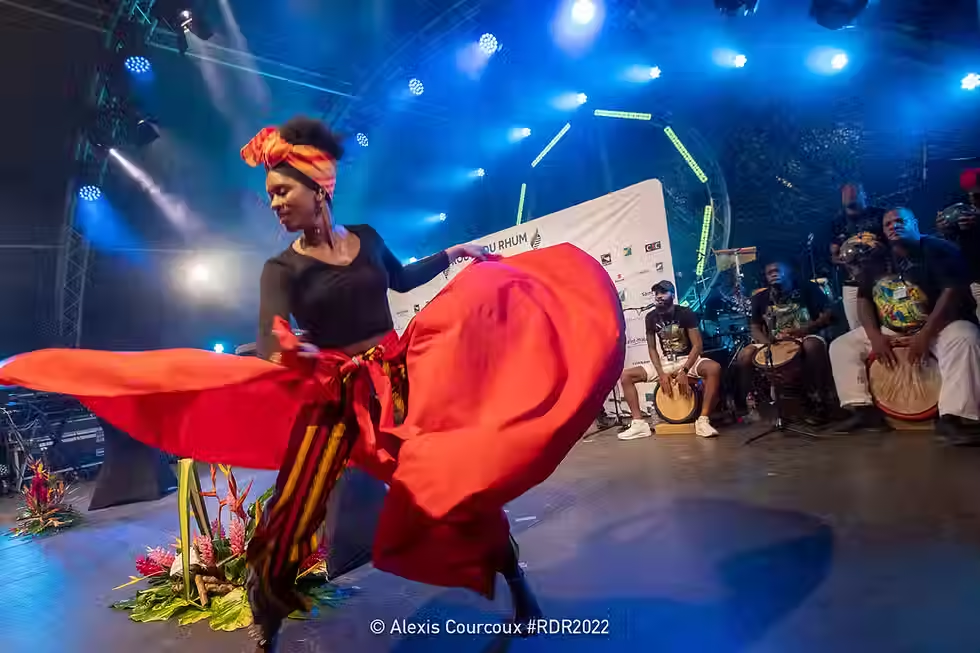
"To experience strong emotions with all the people of Guadeloupe"
For Guadeloupeans, the Route du Rhum – Destination Guadeloupe is “much more than a sporting event,” notes Rodrigue Solitude, director of the Tourism Committee. “ It’s a marker of Guadeloupean identity, a fantastic way to showcase our archipelago. The race’s strength lies above all in the fact that Guadeloupeans have fully embraced it.” In terms of economic impact and visibility, the event helps to unite the population and also to inspire travel. “The key issue goes beyond the one-off attendance,” continues Rodrigue Solitude. “What matters is the powerful exposure that the Route du Rhum offers the islands of Guadeloupe.”
Public authorities are preparing for the event, particularly within the Regional Council where " a dedicated Route du Rhum team has been formed with event specialists," explains Aurélie Deglas, Director of Events, Economic Promotion for the region, and Project Manager for the Route du Rhum - Destination Guadeloupe. Town halls, local authorities, chambers of commerce, the Tourism Board, and private partners are all working together to generate momentum around the race. "Everyone is eagerly awaiting the race to experience the thrills and generate benefits for all Guadeloupeans ," emphasizes Aurélie.
Guadeloupe's involvement will be evident from the outset in Saint-Malo. Visitors will be able to explore the Guadeloupe Islands Pavilion, located near the IMOCA pontoon. This immersive 950 m² pavilion will offer a wealth of information on traveling to Guadeloupe, showcase local crafts, and immerse themselves in a dedicated rum area. Furthermore, a snack stand will be run by students from the Gosier hospitality school.
At the ACTe Memorial, "to create a dialogue between the memories and narratives of the Atlantic"
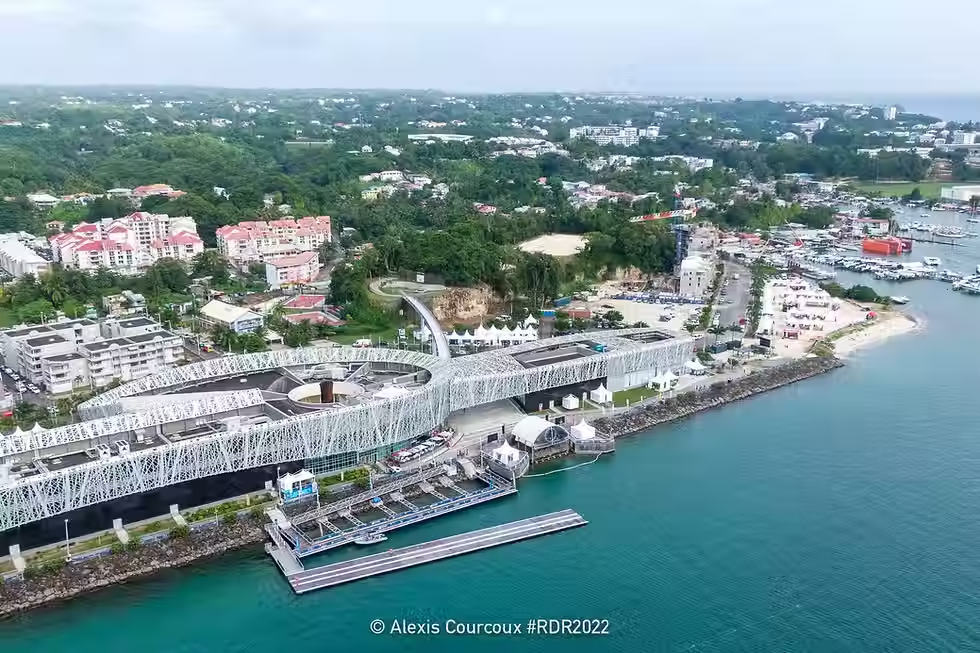
On the other side of the Atlantic, upon arrival, several initiatives will be implemented. The Guadeloupe region has notably strengthened its collaboration with the ACTe Memorial, a site dedicated to the memory and history of slavery, located opposite the pontoons where the skippers will dock. "We want to seize this opportunity to foster dialogue between the memories and stories of the Atlantic ," explains Isabelle Vestris, Director General of the ACTe Memorial. The goal? For the Route du Rhum - Destination Guadeloupe to be "a moment of transmission, sharing, and remembrance." Specifically, the ACTe Memorial "will offer a program centered on the concept of the Crossing" in its programming and outreach activities.
Three villages to make the celebration complete
These initiatives will be available for spectators who come to the finish line area to discover. In addition, everything has been organized to provide a unique experience. They can enjoy a village set up nearby. From November 5th to 15th, this village will allow them to catch all the arrivals, grab a bite to eat, and enjoy the concerts taking place every evening.
Furthermore, during the first weekend of arrivals (November 5-8), a village will be set up in Basse-Terre. Exhibitions, food stalls, and concerts will also take place. Finally, the Regional Council has decided, as it did four years ago, to establish a third village at the Bas du Fort marina in Pointe-à-Pitre. With an educational focus, it will showcase the blue economy, maritime professions, and the importance of preserving marine ecosystems. Many students from local schools are expected to attend. Four years ago, more than 300,000 spectators attended the arrivals of the Route du Rhum - Destination Guadeloupe.