top of page
Benoît Sineau sain et sauf sur le bateau de Jules Bonnier (© Instagram Benoît Sineau)

Having just emerged from a major depression north of the Azores, Bonnier was feeling quite pleased with himself. “I’d had a solid night, closing the gap on the boats ahead of me—I’d even overtaken a few.” During the struggle, he injured his thumb and sent a message to the race doctor. Almost immediately, race director Francis Le Goff called him back. “I thought to myself: they’re incredibly responsive!” Jules smiled as he recounts the tale. But from the tone of Le Goff’s voice, he realized it was not his thumb but a fellow competitor was in distress; he had to go to help as swiftly and safely as possible.


“The water was up to my chest”


“I was on the right side of the depression, on a direct course—there was plenty of wind, but I had two reefs in the mainsail and the J2 headsail up to stay safe,” recounts Benoît Sineau, reflecting on his time aboard Ekinox-Rhétores. “I decided to treat myself to a proper little nap—snuggled into my fleece-lined sleeping bag, with a pillow.”

The skipper set his alarm for a 45-minute rest. Upon waking, “I thought I was having a nightmare. I saw a wave inside my boat, which was already filling with water. With the rough seas, the water was sloshing from side to side, erupting in great geysers.” Sineau tried to locate the leak, activated the pumps, and bailed water out with buckets, but the water level rose too quickly. “I checked the boat again; the water was already up to my chest. I really regretted sleeping for those 45 minutes—if I had seen the water starting to come in, I might have been able to tell where it was coming from,” Benoît explains.

In a matter of seconds, the sailor shifted into survival mode, pulled on his immersion suit (thermal protection suit), and grabbed every emergency beacon he could find. “It was incredibly violent inside.” Outside, conditions were even more hellish. “It was an emergency; the boat was sitting very low in the water, and the sea was raging. I was being swept by waves every five minutes.” Fortunately, Francis Le Goff—who was in constant contact—informed him that other competitors were diverting their courses to help, with the nearest one about an hour away.


“I had no idea what to expect.”


About forty nautical miles from Benoît’s position, when he heard the news Jules Bonnier felt like he’d been “slapped across the face”. Once the initial shock wore off, he composed himself, gybed his Class40, and set a course for the last known position of the boat Ekinox-Rhétores. “I had about a two-and-a-half-hour passage ahead of me. It felt endless. I kept telling myself: I have no idea where I’m going to look—we have absolutely no information.” Shock, fear, and anxiety set in: “I had no idea what to expect.” Jules initially imagined he might need to look for a life raft, but race control informed him that the Class40 yacht was partially submerged and that there was no life raft. “The priority now was to avoid any further accidents—I couldn’t risk damaging either boat.”


“I heard Benoît’s Mayday”


As he began to arrived on the scene, Bonnier began sending messages—at 6 miles out, then 5, then 4… “I hear Benoît’s Mayday! I tell him I’m right nearby and on my way.”

Perched on the tiny portion of his boat still above water, Benoît scanned the horizon. “I saw his sails appearing—that was a huge relief.” He urged Jules not to delay. “I truly felt like I was sinking,” Benoît recalls. Jules maneuvered as close as he could: “The mast was still up, and the top of the cabin top was roughly level with the water,” Jules describes. Time was running out. After three unsuccessful attempts, the fourth one worked. “At a certain point, you have no choice—you have to take risks; you just have to go for it,” Jules explains. “I got as close as possible—less than 5 meters, I think.” Benoît jumped into the water to grab the line that had been thrown to him. “I had every headlamp, flashlight, and small light I could find to make sure I was spotted—I looked like a Christmas tree.” Jules pulled him aboard—“it didn’t take much effort; with all that adrenaline, he could have climbed to the top of the mast!” Benoît was safe and sound—Jules had just saved his life. The two men are relieved.


“The goal: for both of us to reach the dock in Pointe-à-Pitre.”


Jules notified race control and the CROSS (regional maritime rescue coordination center), and gave warm clothing and food to Benoît. “You very quickly feel the weight of  knowing you are the only person nearby. It’s quite a heavy burden to carry,” Jules admits. “But we’re going to see this through to the end. We have water—we don’t have much food, but we’ll manage.”


In agreement with race control, a decision is made it is decided to keep Benoît on board until they reach Guadeloupe, as Jules wishes to continue the race. “He’s allowed to tell me jokes or talk to me, but he’s not allowed to do anything else,” Jules quips. It’s a new kind of living arrangement that takes some getting used to. “When you’re sailing solo, you’re 300% focused,” he explains. “In this situation, it’s essentially like sailing double-handed—with a co-skipper who can’t actually help—but you can’t fully retreat into your own bubble. My Route du Rhum won’t be the one I had imagined. I had to find a new goal: for both of us to arrive at the dock in Pointe-à-Pitre.”

.

Benoît Sineau sain et sauf sur le bateau de Jules Bonnier (© Photo : Jules Bonnier)

The solidarity of seafarers

“After a day and a half of exhaustion, sleep, and trying to gather my thoughts, my mind is racing,” Benoît reflects. “The frustration, the shock… It’s painful to leave your boat like that in the middle of the ocean, to have to stop a race that was going so well. What hurts the most is not understanding what actually happened.” Tears well up as he finishes his account, yet Benoît Sineau still wants to express his gratitude to Jules Bonnier—“who quite simply saved my life”—and gives his thanks to the race organizers and everyone else involved in his rescue.


The final word goes to Jules: “He’ll remember me for the rest of his life, and I’ll remember him for the rest of mine.” It is yet another perfect illustration of the unwavering solidarity among those who sail the seas

5 hours ago
5 min read

It is the alarm that every sailor and race director dreads: a distress beacon going off. But suddenly last Saturday, Benoît Sineau’s  was set off. His boat was sinking. Emergency procedures were immediately set in motion to recover the skipper of the Class40 Ekinox-Rhétores. Jules Bonnier (Plastic Odyssey), who was 36 miles away, diverted his course. Despite treacherous sea conditions, Jules managed to rescue Benoît. Here is a gripping account of a perilous rescue.
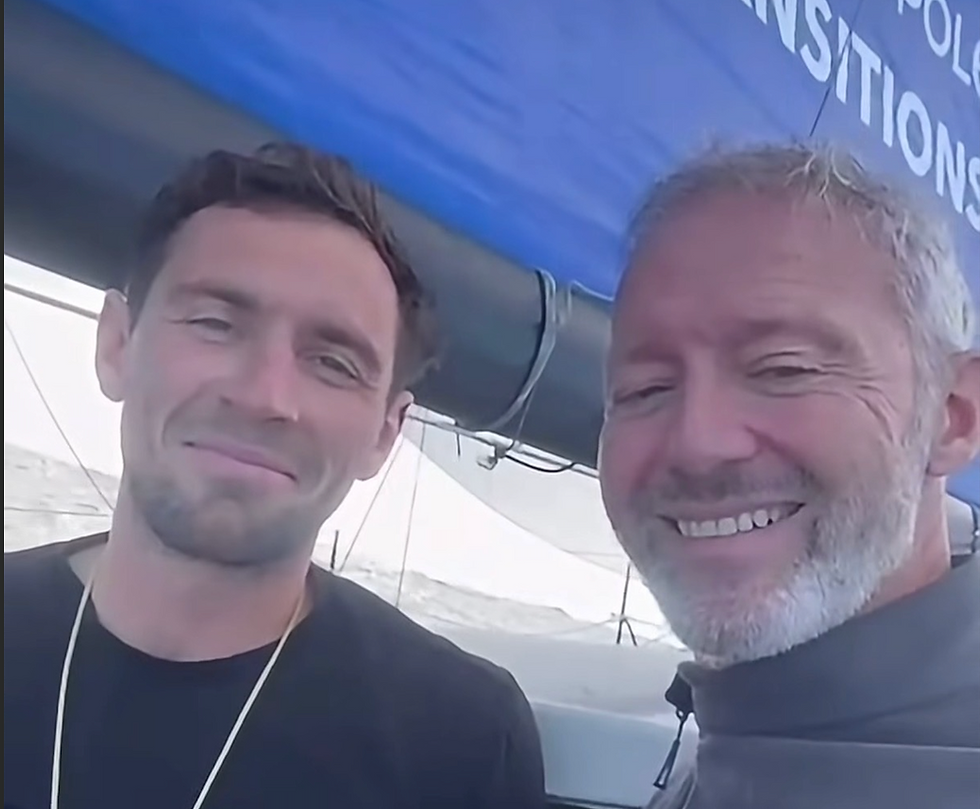

Benoît Sineau sain et sauf sur le bateau de Jules Bonnier (© Instagram Benoît Sineau)

Having just emerged from a major depression north of the Azores, Bonnier was feeling quite pleased with himself. “I’d had a solid night, closing the gap on the boats ahead of me—I’d even overtaken a few.” During the struggle, he injured his thumb and sent a message to the race doctor. Almost immediately, race director Francis Le Goff called him back. “I thought to myself: they’re incredibly responsive!” Jules smiled as he recounts the tale. But from the tone of Le Goff’s voice, he realized it was not his thumb but a fellow competitor was in distress; he had to go to help as swiftly and safely as possible.


“The water was up to my chest”


“I was on the right side of the depression, on a direct course—there was plenty of wind, but I had two reefs in the mainsail and the J2 headsail up to stay safe,” recounts Benoît Sineau, reflecting on his time aboard Ekinox-Rhétores. “I decided to treat myself to a proper little nap—snuggled into my fleece-lined sleeping bag, with a pillow.”

The skipper set his alarm for a 45-minute rest. Upon waking, “I thought I was having a nightmare. I saw a wave inside my boat, which was already filling with water. With the rough seas, the water was sloshing from side to side, erupting in great geysers.” Sineau tried to locate the leak, activated the pumps, and bailed water out with buckets, but the water level rose too quickly. “I checked the boat again; the water was already up to my chest. I really regretted sleeping for those 45 minutes—if I had seen the water starting to come in, I might have been able to tell where it was coming from,” Benoît explains.

In a matter of seconds, the sailor shifted into survival mode, pulled on his immersion suit (thermal protection suit), and grabbed every emergency beacon he could find. “It was incredibly violent inside.” Outside, conditions were even more hellish. “It was an emergency; the boat was sitting very low in the water, and the sea was raging. I was being swept by waves every five minutes.” Fortunately, Francis Le Goff—who was in constant contact—informed him that other competitors were diverting their courses to help, with the nearest one about an hour away.


“I had no idea what to expect.”


About forty nautical miles from Benoît’s position, when he heard the news Jules Bonnier felt like he’d been “slapped across the face”. Once the initial shock wore off, he composed himself, gybed his Class40, and set a course for the last known position of the boat Ekinox-Rhétores. “I had about a two-and-a-half-hour passage ahead of me. It felt endless. I kept telling myself: I have no idea where I’m going to look—we have absolutely no information.” Shock, fear, and anxiety set in: “I had no idea what to expect.” Jules initially imagined he might need to look for a life raft, but race control informed him that the Class40 yacht was partially submerged and that there was no life raft. “The priority now was to avoid any further accidents—I couldn’t risk damaging either boat.”


“I heard Benoît’s Mayday”


As he began to arrived on the scene, Bonnier began sending messages—at 6 miles out, then 5, then 4… “I hear Benoît’s Mayday! I tell him I’m right nearby and on my way.”

Perched on the tiny portion of his boat still above water, Benoît scanned the horizon. “I saw his sails appearing—that was a huge relief.” He urged Jules not to delay. “I truly felt like I was sinking,” Benoît recalls. Jules maneuvered as close as he could: “The mast was still up, and the top of the cabin top was roughly level with the water,” Jules describes. Time was running out. After three unsuccessful attempts, the fourth one worked. “At a certain point, you have no choice—you have to take risks; you just have to go for it,” Jules explains. “I got as close as possible—less than 5 meters, I think.” Benoît jumped into the water to grab the line that had been thrown to him. “I had every headlamp, flashlight, and small light I could find to make sure I was spotted—I looked like a Christmas tree.” Jules pulled him aboard—“it didn’t take much effort; with all that adrenaline, he could have climbed to the top of the mast!” Benoît was safe and sound—Jules had just saved his life. The two men are relieved.


“The goal: for both of us to reach the dock in Pointe-à-Pitre.”


Jules notified race control and the CROSS (regional maritime rescue coordination center), and gave warm clothing and food to Benoît. “You very quickly feel the weight of  knowing you are the only person nearby. It’s quite a heavy burden to carry,” Jules admits. “But we’re going to see this through to the end. We have water—we don’t have much food, but we’ll manage.”


In agreement with race control, a decision is made it is decided to keep Benoît on board until they reach Guadeloupe, as Jules wishes to continue the race. “He’s allowed to tell me jokes or talk to me, but he’s not allowed to do anything else,” Jules quips. It’s a new kind of living arrangement that takes some getting used to. “When you’re sailing solo, you’re 300% focused,” he explains. “In this situation, it’s essentially like sailing double-handed—with a co-skipper who can’t actually help—but you can’t fully retreat into your own bubble. My Route du Rhum won’t be the one I had imagined. I had to find a new goal: for both of us to arrive at the dock in Pointe-à-Pitre.”

.
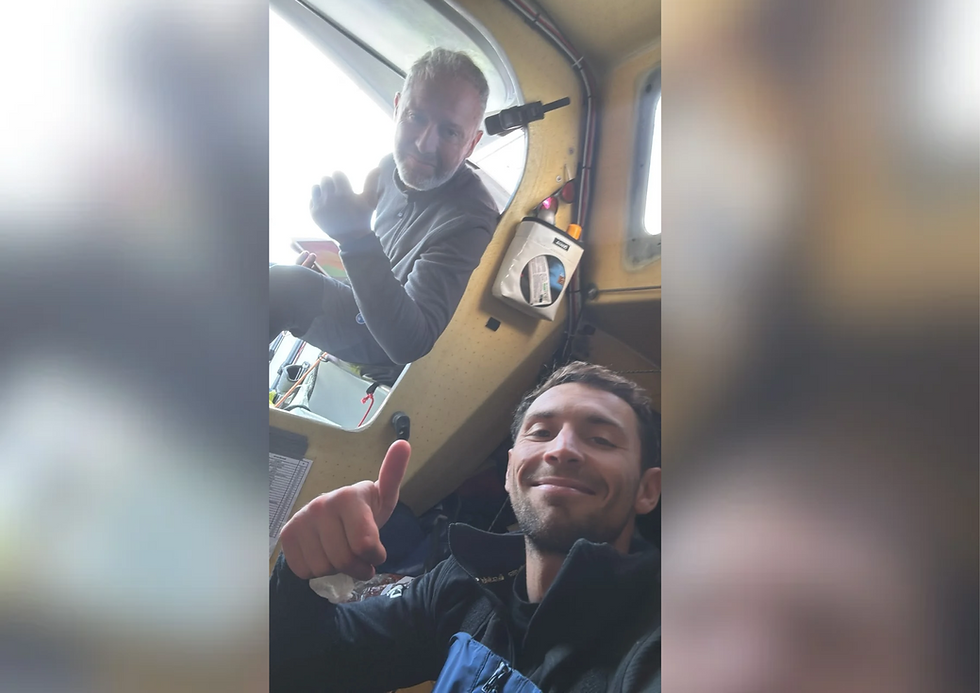
Benoît Sineau sain et sauf sur le bateau de Jules Bonnier (© Photo : Jules Bonnier)

The solidarity of seafarers

“After a day and a half of exhaustion, sleep, and trying to gather my thoughts, my mind is racing,” Benoît reflects. “The frustration, the shock… It’s painful to leave your boat like that in the middle of the ocean, to have to stop a race that was going so well. What hurts the most is not understanding what actually happened.” Tears well up as he finishes his account, yet Benoît Sineau still wants to express his gratitude to Jules Bonnier—“who quite simply saved my life”—and gives his thanks to the race organizers and everyone else involved in his rescue.


The final word goes to Jules: “He’ll remember me for the rest of his life, and I’ll remember him for the rest of mine.” It is yet another perfect illustration of the unwavering solidarity among those who sail the seas


bottom of page