

Tom Laperche is one of the top favorites for the upcoming Route du Rhum Destination Guadeloupe. So many observers overlook just how young and talented he really is. At just 29 he is preparing to compete on his first Route du Rhum be he already has everything it takes to win. Having won two handed on the Transat Café L’Or, his Ultim ‘SVR-Lazartigue’, has undergone further optimization. Sharp-minded and visibly focused, Laperche has a very clear vision of what needs to be done to win once again—this time solo and into Pointe-à-Pitre.
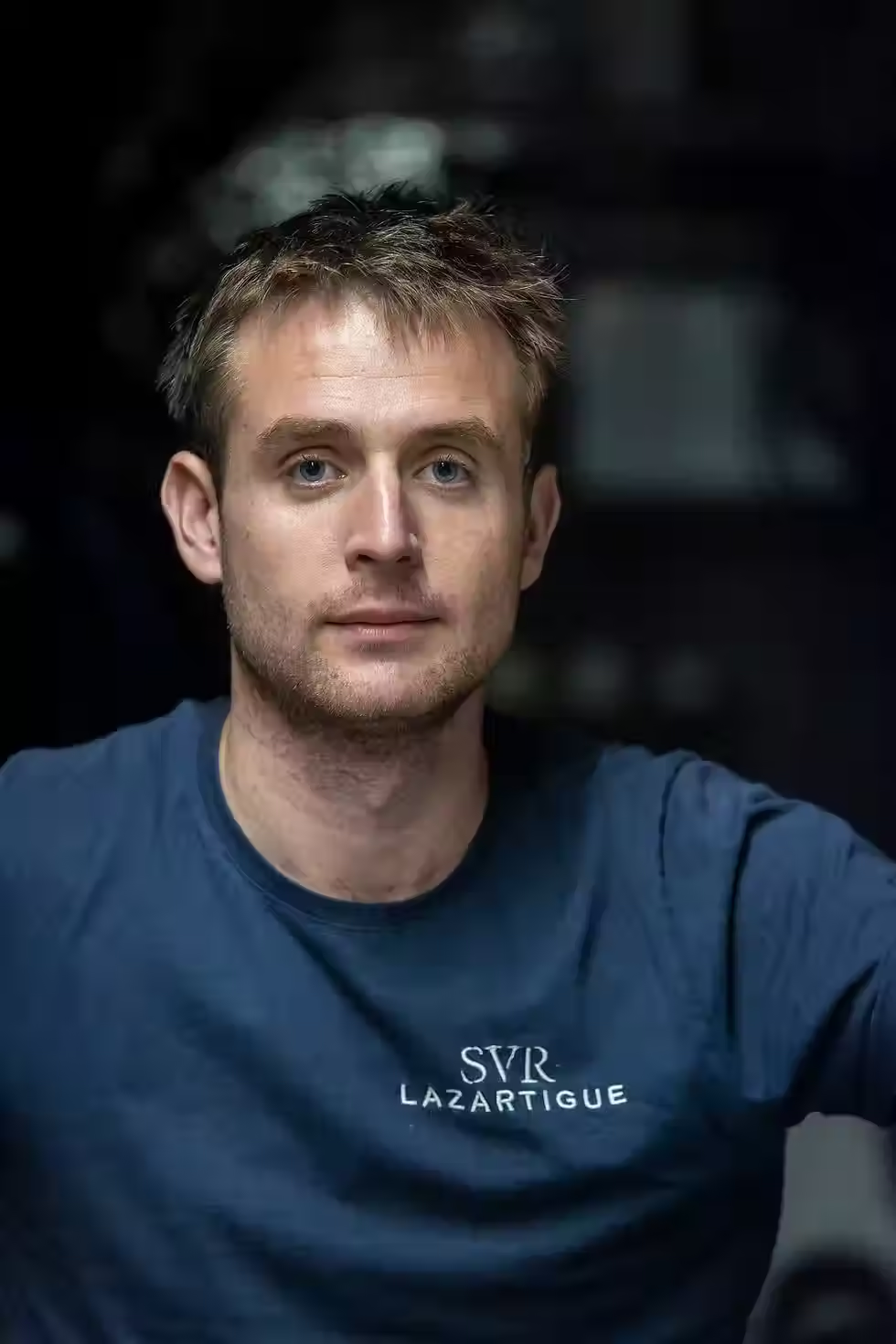
Laperche has been sailing ‘SVR-Lazartigue’ for four years now, and it feels like a perfectly natural fit. It is, it seems, now possible to be under 30, to be at the helm of one of the top performing, most modern boats in the fleet, and to be racing the Route du Rhum as a serious contender. In truth Laperche has always been a sailor ahead of his years, something of a prodigy and so has long ago dealt with questions regarding his age or his early success.
Four years after winning the Solitaire du Figaro, and one year after his victory in the Transat Café L’Or, he knows that the stars have aligned for him to be starting as one of the outstanding favourites. As for winning? He sees victory it as the ultimate goal, but prefers to focus on the just the journey ahead. A few days before the opening of the race village, he sat down with us to answer our questions at length.
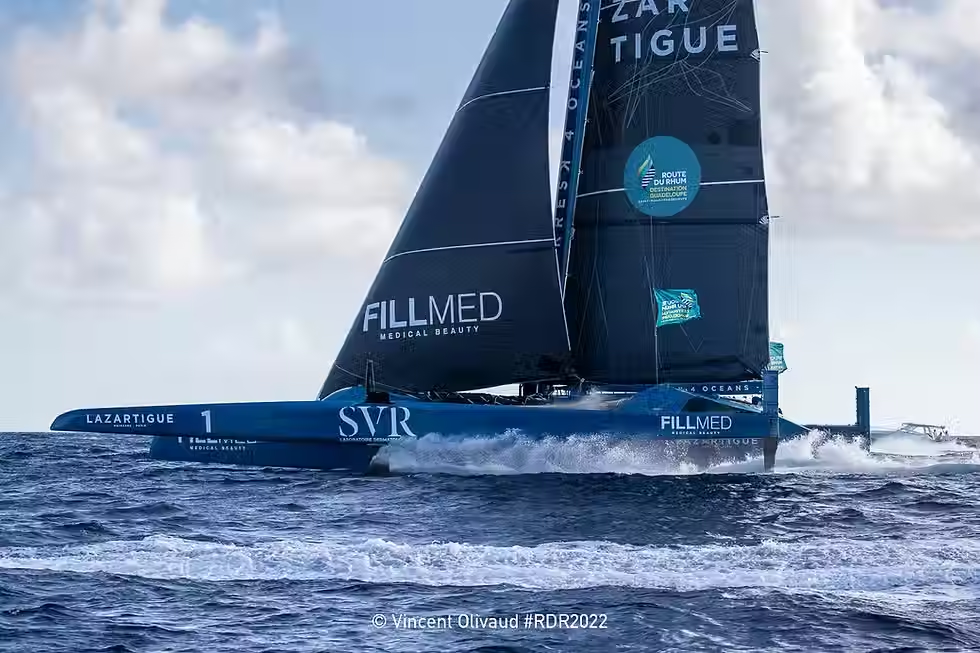
What is your connection—your personal history—with the Route du Rhum – Destination Guadeloupe? I was born in 1997, so my earliest memories date back to the 2002 edition. There was a fair amount of damage and drama; I remember hearing about it on television and the radio. What’s surprising is that I felt the urge to take part in the Route du Rhum from a very young age. As a child, I even wanted to compete in it in an Optimist dinghy! It was a bit of a childish notion—until Laurent Bourgnon, a family friend, had to explain to me that it wasn’t actually possible… In any case, it really was the Route du Rhum that truly sparked my interest in racing. Seeing multihulls sailing at full speed across the Atlantic has always fascinated me!
You also went to the start to cheer on your father… Yes, he competed in the 2010 edition as an amateur, sailing a 50-foot trimaran. He was a dentist, and he made the time to take on that challenge. It was a wonderful family endeavor: we helped him prepare the boat, stock up on provisions, and clean the hull. That was the first time I ever visited the Route du Rhum race village.
“We are working toward victory.”
Speaking of this, does the mix of professional skippers and serious amateurs add an extra dimension to the race? Yes, it’s incredibly positive. That’s why the Route du Rhum brings people together. It joins amateurs who are setting off to fulfill a lifelong dream—just as my dad did—with skippers involved in highly complex projects, which is the case for me today. For these reasons, it’s an event that is truly open, with no limits!
This is your first time participating. Do you see it as a milestone or a stepping stone in your development, or do you view it differently? I’m very happy to be part of this, but, more than anything, I’m grateful for the trust shown by a partner and a team, allowing me to compete in the premier category of multihulls. As for the rest—those are the kinds of questions I asked myself back when I first took the helm of this large trimaran, ‘SVR-Lazartigue’. Now, my daily focus is on continuous improvement and ensuring that, as a team, we’re moving in the best possible direction.
Is your key goal victory? Of course, we’re all working toward victory; that’s the entire team’s objective. But we can’t think only about that—victory is just the icing on the cake. There are plenty of intermediate goals along the way to meet, both before and during the race. You have to do everything in your power to feel comfortable and make the right choices regarding your course. If you reach a state of mind where everything flows naturally, and you make the right decisions, that can lead to victory.
“In the Ultim class, you have to be on your toes at all times.”
Speaking of which, what have you optimized since your win in the Transat Café L’Or?We’ve reworked the aerodynamics of the platform, got som new sails, added a new foil, and fitted slightly deeper rudders. The idea is to fly as high as possible to minimize contact with the waves. The trade-off, however, is that the higher you fly, the less stable you become—which is where our new rudders come in. Furthermore, we’ve put a great deal of effort into making our systems more reliable; it’s the kind of behind-the-scenes work that goes largely unnoticed, yet it’s invaluable for the race.
Your new starboard foil was damaged and replaced by the old one a few weeks ago. What impact will that have? It doesn’t really have an impact. It shows that we are capable of replacing one appendage with another. Those initial foils were very successful—we won the Rolex Fastnet Race with them…
Can you explain the elements which make the Route du Rhum is such a difficult race?Because it’s ...a sprint—and on these boats, to be fast, you always have to be right on the edge. It generates a great deal of adrenaline and tension, and managing yourself is crucial, because it’s very difficult to rest when you’re moving at full speed. The physical exertion is immense, and mentally, it’s intense. You have to be constantly on alert, ready to react—it’s incredibly demanding. Sailing these boats leaves you completely drained!
“It’s going to be intense.”
How do you view the competition? With Armel Le Cléac’h (Maxi Banque Populaire XI), Thomas Coville (Sodebo), and Anthony Marchand (Actual Ultim 3), the field is actually very evenly matched. It’s going to be highly intense; the gaps between us could be very small—it will be pure racing.
What are your thoughts on the new Maxi Edmond de Rothschild? It’s a something of an unknown, as we haven’t gone head-to-head with them yet. It represents a new concept in terms of flight, foils, and offshore sailing. It’s a new milestone—a new generation—but for now, we haven’t seen it in all its various modes of sailing. We don’t yet know to what extent they’ll be able to tap into the boat’s potential, though the team and Charles are certainly very talented. But I’m more focused on what we—my team and I—are going to do!
Finally, how and when do you actually enjoy being on board? From the moment we start sailing, we experience extraordinary moments. Sure, we’re always teetering on the edge, but that delivers incredibly powerful sensations. There’s the joy of gliding, the rush of adrenaline… It’s a huge source of motivation, and it’s truly something I look for every time I head out to sea.