top of page

Class Overview (3/6). A love for multihulls isn’t always easy to explain. It’s often a case of love at first sight—intense, sometimes heart-wrenching, with breakups that sting—yet here we see some pairings reconcile, staying together for a lifetime!…

The 13 skippers setting off on November 1st in the Route du Rhum Destination Guadeloupe’s  "Vintage Multi" class all share the same deep passion for their boats. They honour a race history which began in 1978 with the surprise victory of the tiny Olympus, and they continue to tell the story of the continuous, ongoing love affair between the Route du Rhum – Destination Guadeloupe and multihulls
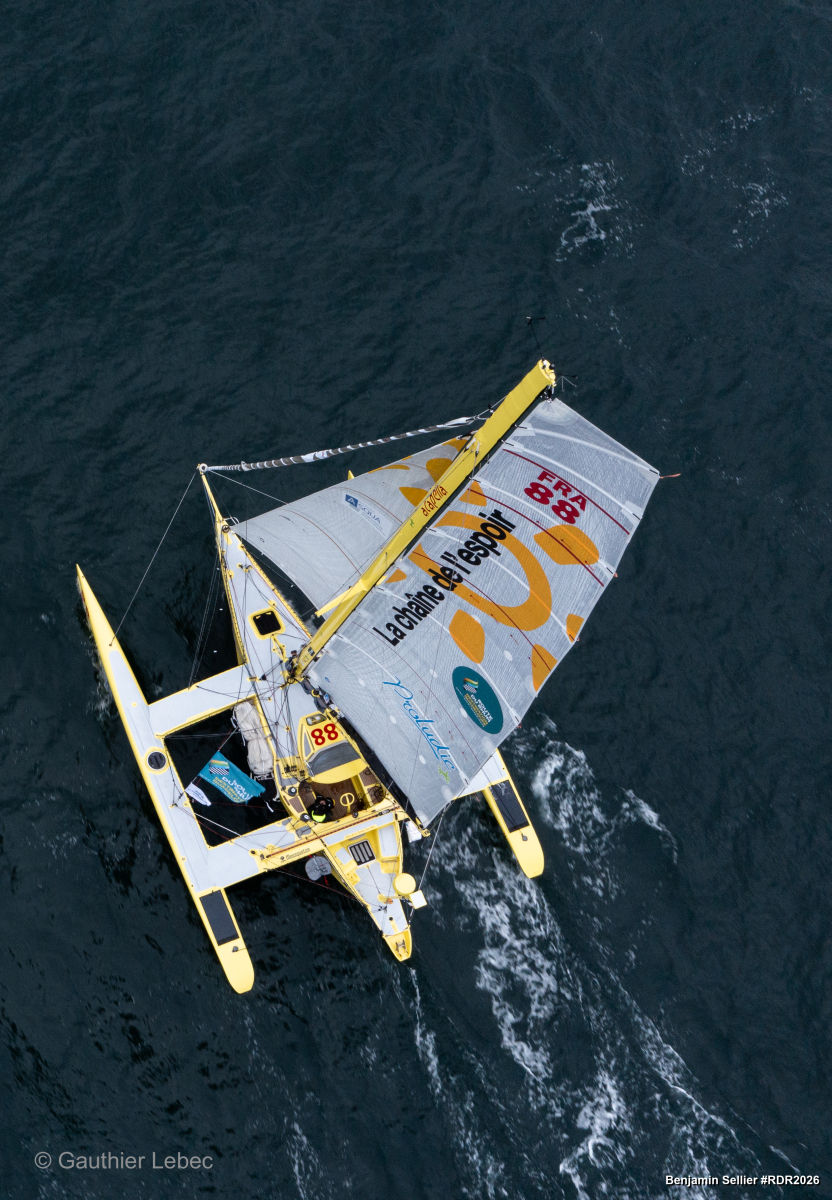

Le trimaran de Charlie Capelle, l'un des 5 A Capella construits par Walter Greene

Ranging from 12 to 23 meters in length, there is plenty to choose from for anyone strolling along the Quai Bajoyer to discover this fleet of multihulls—many of the boats that defined the most iconic moments in the history of the *Route du Rhum – Destination Guadeloupe. Visitors might be struck by the low number of catamarans—there are only two and both are modern and contemporary: François Guiffant’s We Explore (he took over the helm after the withdrawl of Roland Jourdain for medical reasons) and Marc Guillemot’s MG5 – Wellness Training. In a way, this accurately reflects the history of the race, which has been won by a catamaran only once (Marc Pajot, Elf Aquitaine, 1982). Trimarans, by contrast, are present in force, falling into two easily identifiable subcategories.


Trimarans from the "American School"


In the mid-1970s, Walter Greene and Dick Newick introduced a pragmatic—and truly brilliant—vision of multihulls that would dominate for about a decade. Their trimarans were the antithesis of American cars of the era: they weren't heavy, chrome-laden, or overpowered. Instead, they emphasized material efficiency, organic shapes, and the use of wood—leveraging its natural properties of rigidity and lightness. The Polynesian spirit—which dictates working with the elements rather than confronting them—is never far away.

Take a look at Fifty Fifty, a surviving example from Dick Newick’s small "Creative" series. With its banana-like curves, one can easily imagine it swaying across the Atlantic. The canoe-sterned floats, the single wing-shaped crossbeam (which houses two double berths!), and a porthole designed to resemble the eye of a sea creature give it a unique and deeply endearing silhouette. "These are wooden boats; they need love!" says skipper Laurent Etheimer, who has carried out extensive structural work on this vessel—built in 1982 in La Trinité-sur-Mer—as it prepares for its fourth Route du Rhum. After competing in 2018 aboard an ACapella (the former Happy, once sailed by Loïck Peyron—a craft similar to the 1978 Olympus), Laurent acquired this 12-meter trimaran from Christophe Bogrand. Bogrand himself is now racing Des Enfants et des Arbres, a 50-foot Newick design quite similar to Moxie, the winner of the 1980 English Transat.


Together with Thierry Roger and Charlie Capelle, this group of four is set for a spirited contest across the Atlantic, years later, again following in the wake of Olympus. At 71 years old, Charlie Capelle is the race’s eldest participant, marking his seventh entry. A boatbuilder—having learned his trade at Walter Greene’s yard in Yarmouth, Maine—and an experienced sailor, he has dedicated his life to ACapella (Acapella Proludic-La Chaîne de l’Espoir). He recovered the boat as a wreck in 1983, rebuilt it once, and then has rebuilt it twice more following two separate capsizes. A boat that refuses to die—presented in Saint-Malo, as always, in pristine, show-ready condition. Its skipper isn’t necessarily racing for the win, but he still dreams of crossing the finish line in Pointe-à-Pitre in under 20 days. His mentor, Mike Birch, took 24 days back in 1978—and he competed in his final Route du Rhum at the age of 72. So, who’s to say this will be the last one for the indomitable Charlie!
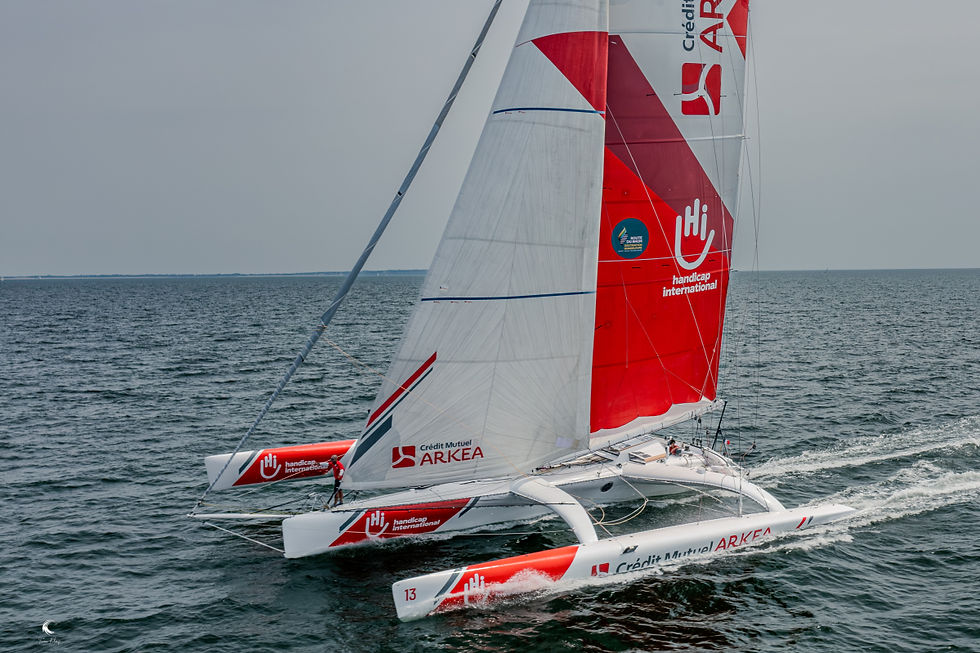
 

L'ex-Fujicolor II, comme neuf, aux mains de Damien Seguin

the gang of four ORMAs


The ORMA gang

These 60-footers—the "Formula 1" cars of offshore racing from 1990 to 2006, which attracted the highest level of talent for both crewed and solo sailing—are undoubtedly the main attraction this year. In 2022, Philippe Poupon caused a stir by setting sail on Flo, the trimaran that carried Florence Arthaud to victory in 1990. As is often the case with good ideas, this one occurred to several people at once; four ORMA trimarans will be on the starting line on November 1st. "While talking to other competitors, I managed to track down the former Fujicolor II," explains Damien Seguin, who, as a child, witnessed its arrival in Guadeloupe (where he grew up) in 1990 with Mike Birch at the helm. "The boat was in Turkey; I went to see it, and before making up my mind, I asked Francis Joyon—who sails a sister ship—plenty of questions. He gave me some excellent advice, so I took the plunge!"


This marks two times Vendée Globe finisher Damien’s (sailing Arkea-Handicap International) first solo transatlantic race in a multihull; he feels ready to take on the challenge of handling these notoriously temperamental ORMA machines. As for Francis Joyon, he is setting off for his ninth edition—every one of which he has contested in a multihull (Joyon and "multihull" are synonyms!). Never mind that he is 70 years old; he stands as a favorite, given the immense experience of the 2018 winner. He has brought back out the former He has brought the former Eure et Loire out of retirement, readying this 1994 Irens design—the very boat on which he won the 2000 English Transat—and is looking forward to ten days of a relentless "wash-and-spin" cycle aboard. "Everything is under extreme load, all the time. There’s no such thing as boredom or tranquility here," says the skipper of his trimaran, which he has fittingly renamed Océans.


Damien and Francis, who are near neighbors in their home village of Locmariaquer, will also have to contend with two other ORMA-class trimarans on the course. Gilles Lamiré is setting off for the third time aboard Groupe GCA—formerly Jean Maurel’s Elf Aquitaine—which is instantly recognizable by its tubular crossbeams. It is the oldest of the ORMA fleet (dating back to 1988), sits lowest to the water, and is arguably the most demanding to handle in a breeze—though, as Gilles warns, it is "an absolute beast when it comes to gliding in light winds." At the other end of the spectrum is Brest, the trimaran skippered by Eric Péron; designed by Lombard, it belongs to the final generation of ORMA boats (2002) and was the first to feature curved foils. Its skipper tracked it down to the USA where it had been sailing on Chesapeake Bay. He is a competitor to watch closely: Eric knows the route well and is no stranger to high speeds—a skill set honed, in particular, during his circumnavigation in an Ultim-class trimaran.


What kind of pace, then, will these "fantastic four" maintain? "That will depend a great deal on the conditions," predicts Damien Seguin. "If the weather is favorable, it’s going to be a fantastic contest." “If conditions get tougher, everyone is smart enough to be careful, and Francis Joyon will surely have the know-how to find the right pace.”

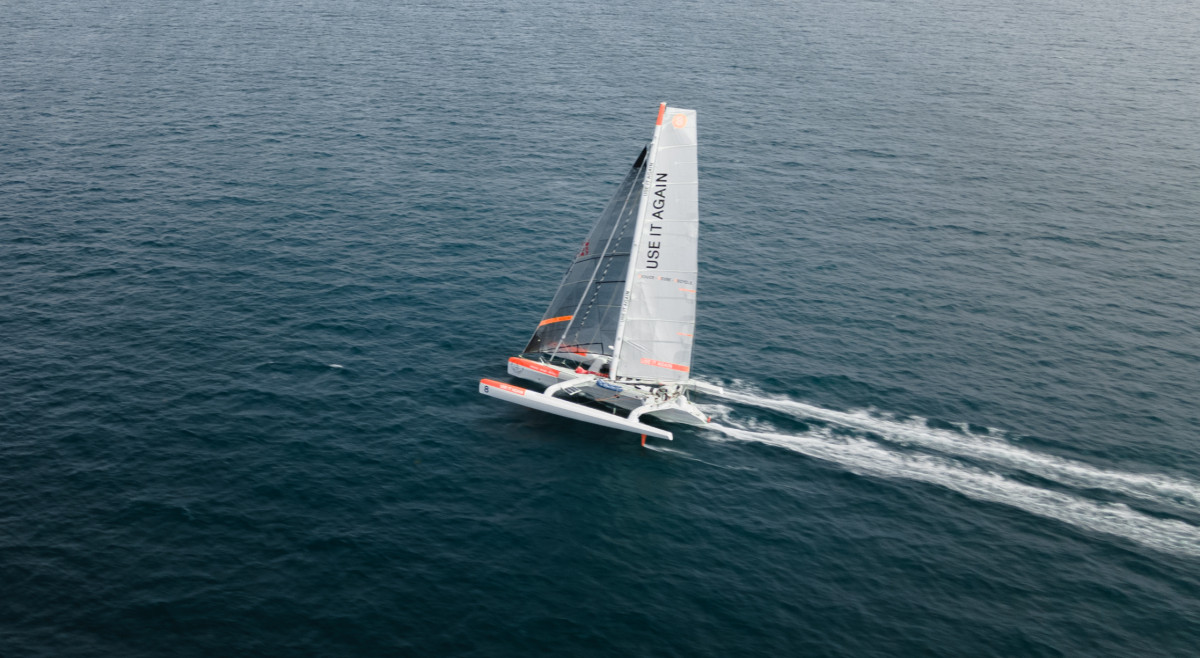
Will one of the four ORMA trimarans inevitably be in the lead upon arrival in Pointe-à-Pitre? It is highly likely, as—on paper—the only real challenger to them is Use It Again!, with its 23-meter length. The Nigel Irens-Benoit Cabaret used by Dame Ellen MacArthur in 2005 for her solo circumnavigation of the globe has the potential to do so, especially if conditions are harsh during the first leg of the race. Its skipper, Romain Pillard, already has the experience of one previous Route du Rhum under his belt—though, back then, he was sailing well behind the Ultims he found himself competing against in 2022.


the class in images.....


1 day ago
5 min read

Class Overview (3/6). A love for multihulls isn’t always easy to explain. It’s often a case of love at first sight—intense, sometimes heart-wrenching, with breakups that sting—yet here we see some pairings reconcile, staying together for a lifetime!…

The 13 skippers setting off on November 1st in the Route du Rhum Destination Guadeloupe’s  "Vintage Multi" class all share the same deep passion for their boats. They honour a race history which began in 1978 with the surprise victory of the tiny Olympus, and they continue to tell the story of the continuous, ongoing love affair between the Route du Rhum – Destination Guadeloupe and multihulls


Le trimaran de Charlie Capelle, l'un des 5 A Capella construits par Walter Greene

Ranging from 12 to 23 meters in length, there is plenty to choose from for anyone strolling along the Quai Bajoyer to discover this fleet of multihulls—many of the boats that defined the most iconic moments in the history of the *Route du Rhum – Destination Guadeloupe. Visitors might be struck by the low number of catamarans—there are only two and both are modern and contemporary: François Guiffant’s We Explore (he took over the helm after the withdrawl of Roland Jourdain for medical reasons) and Marc Guillemot’s MG5 – Wellness Training. In a way, this accurately reflects the history of the race, which has been won by a catamaran only once (Marc Pajot, Elf Aquitaine, 1982). Trimarans, by contrast, are present in force, falling into two easily identifiable subcategories.


Trimarans from the "American School"


In the mid-1970s, Walter Greene and Dick Newick introduced a pragmatic—and truly brilliant—vision of multihulls that would dominate for about a decade. Their trimarans were the antithesis of American cars of the era: they weren't heavy, chrome-laden, or overpowered. Instead, they emphasized material efficiency, organic shapes, and the use of wood—leveraging its natural properties of rigidity and lightness. The Polynesian spirit—which dictates working with the elements rather than confronting them—is never far away.

Take a look at Fifty Fifty, a surviving example from Dick Newick’s small "Creative" series. With its banana-like curves, one can easily imagine it swaying across the Atlantic. The canoe-sterned floats, the single wing-shaped crossbeam (which houses two double berths!), and a porthole designed to resemble the eye of a sea creature give it a unique and deeply endearing silhouette. "These are wooden boats; they need love!" says skipper Laurent Etheimer, who has carried out extensive structural work on this vessel—built in 1982 in La Trinité-sur-Mer—as it prepares for its fourth Route du Rhum. After competing in 2018 aboard an ACapella (the former Happy, once sailed by Loïck Peyron—a craft similar to the 1978 Olympus), Laurent acquired this 12-meter trimaran from Christophe Bogrand. Bogrand himself is now racing Des Enfants et des Arbres, a 50-foot Newick design quite similar to Moxie, the winner of the 1980 English Transat.


Together with Thierry Roger and Charlie Capelle, this group of four is set for a spirited contest across the Atlantic, years later, again following in the wake of Olympus. At 71 years old, Charlie Capelle is the race’s eldest participant, marking his seventh entry. A boatbuilder—having learned his trade at Walter Greene’s yard in Yarmouth, Maine—and an experienced sailor, he has dedicated his life to ACapella (Acapella Proludic-La Chaîne de l’Espoir). He recovered the boat as a wreck in 1983, rebuilt it once, and then has rebuilt it twice more following two separate capsizes. A boat that refuses to die—presented in Saint-Malo, as always, in pristine, show-ready condition. Its skipper isn’t necessarily racing for the win, but he still dreams of crossing the finish line in Pointe-à-Pitre in under 20 days. His mentor, Mike Birch, took 24 days back in 1978—and he competed in his final Route du Rhum at the age of 72. So, who’s to say this will be the last one for the indomitable Charlie!


L'ex-Fujicolor II, comme neuf, aux mains de Damien Seguin

the gang of four ORMAs


The ORMA gang

These 60-footers—the "Formula 1" cars of offshore racing from 1990 to 2006, which attracted the highest level of talent for both crewed and solo sailing—are undoubtedly the main attraction this year. In 2022, Philippe Poupon caused a stir by setting sail on Flo, the trimaran that carried Florence Arthaud to victory in 1990. As is often the case with good ideas, this one occurred to several people at once; four ORMA trimarans will be on the starting line on November 1st. "While talking to other competitors, I managed to track down the former Fujicolor II," explains Damien Seguin, who, as a child, witnessed its arrival in Guadeloupe (where he grew up) in 1990 with Mike Birch at the helm. "The boat was in Turkey; I went to see it, and before making up my mind, I asked Francis Joyon—who sails a sister ship—plenty of questions. He gave me some excellent advice, so I took the plunge!"


This marks two times Vendée Globe finisher Damien’s (sailing Arkea-Handicap International) first solo transatlantic race in a multihull; he feels ready to take on the challenge of handling these notoriously temperamental ORMA machines. As for Francis Joyon, he is setting off for his ninth edition—every one of which he has contested in a multihull (Joyon and "multihull" are synonyms!). Never mind that he is 70 years old; he stands as a favorite, given the immense experience of the 2018 winner. He has brought back out the former He has brought the former Eure et Loire out of retirement, readying this 1994 Irens design—the very boat on which he won the 2000 English Transat—and is looking forward to ten days of a relentless "wash-and-spin" cycle aboard. "Everything is under extreme load, all the time. There’s no such thing as boredom or tranquility here," says the skipper of his trimaran, which he has fittingly renamed Océans.


Damien and Francis, who are near neighbors in their home village of Locmariaquer, will also have to contend with two other ORMA-class trimarans on the course. Gilles Lamiré is setting off for the third time aboard Groupe GCA—formerly Jean Maurel’s Elf Aquitaine—which is instantly recognizable by its tubular crossbeams. It is the oldest of the ORMA fleet (dating back to 1988), sits lowest to the water, and is arguably the most demanding to handle in a breeze—though, as Gilles warns, it is "an absolute beast when it comes to gliding in light winds." At the other end of the spectrum is Brest, the trimaran skippered by Eric Péron; designed by Lombard, it belongs to the final generation of ORMA boats (2002) and was the first to feature curved foils. Its skipper tracked it down to the USA where it had been sailing on Chesapeake Bay. He is a competitor to watch closely: Eric knows the route well and is no stranger to high speeds—a skill set honed, in particular, during his circumnavigation in an Ultim-class trimaran.


What kind of pace, then, will these "fantastic four" maintain? "That will depend a great deal on the conditions," predicts Damien Seguin. "If the weather is favorable, it’s going to be a fantastic contest." “If conditions get tougher, everyone is smart enough to be careful, and Francis Joyon will surely have the know-how to find the right pace.”

Will one of the four ORMA trimarans inevitably be in the lead upon arrival in Pointe-à-Pitre? It is highly likely, as—on paper—the only real challenger to them is Use It Again!, with its 23-meter length. The Nigel Irens-Benoit Cabaret used by Dame Ellen MacArthur in 2005 for her solo circumnavigation of the globe has the potential to do so, especially if conditions are harsh during the first leg of the race. Its skipper, Romain Pillard, already has the experience of one previous Route du Rhum under his belt—though, back then, he was sailing well behind the Ultims he found himself competing against in 2022.


the class in images.....


bottom of page