


The 118 sailors in the upcoming Route du Rhum - Destination Guadeloupe all share a common goal: months or even years of preparation. Their objective? To be ready to give their all on race day. Of course, the specific characteristics of each boat and the ambitions of each skipper lead to different preparations. Nevertheless, in terms of technique, physical conditioning, and mental strength, many parallels exist between the participants. We spoke with six of the skippers who will be at the starting line on November 1st to learn more .
They give their testimonies in the article:
- Armel Le Cléac'h (Banque Populaire, Ultim), 4th participation in the Route du Rhum-Destination Guadeloupe
- Anne-Claire Le Berre (Upwind by MerConcept), the only female competitor in the Ocean Fifty
- Corentin Horeau (MACSF), former Figaro sailor and regular podium finisher, has been leading an IMOCA project since the start of the season
- Guillaume Pirouelle (Sogestran Seafrigo), one of the candidates for victory in Class40
- Charlie Capelle (Acapella – Proludic – La Chaîne de l'Espoir, Vintage Multi), 71 years old, the oldest competitor in the race who is preparing to run it for the 7th time
- Gilles Colubi (SNSM Guilvinec, Vintage Mono), skipper of the smallest boat in the fleet (a Pogo 12.50)

All roads lead to the Route du Rhum. Each skipper cultivates their own motivations as they approach this legendary race. But what they all have in common is the commitment to actively preparing for it. And the sailors have only one objective: "to set off in the best possible conditions and as well prepared as possible ," asserts Guillaume Pirouelle. "In terms of preparation, you can never reach perfection, but you have to do everything you can to get close," smiles Corentin Horeau. Armel Le Cléac'h, for his part, sees preparation as "a set of boxes that you have to patiently tick off until the finish line ." For all of them, the countdown has been on for a long time now. Armel, Guillaume, and Corentin have been fully focused on it since the beginning of the season, and Anne-Claire since she launched her program two years ago. “Me too, I’ve been thinking about nothing else for two years,” jokes Charlie Capelle, who is aiming for his 7th participation at 71 years old. He has set himself the goal of being “ready in a month”.
But what parameters need to be anticipated in order to achieve this?
Technically, leave nothing to chance
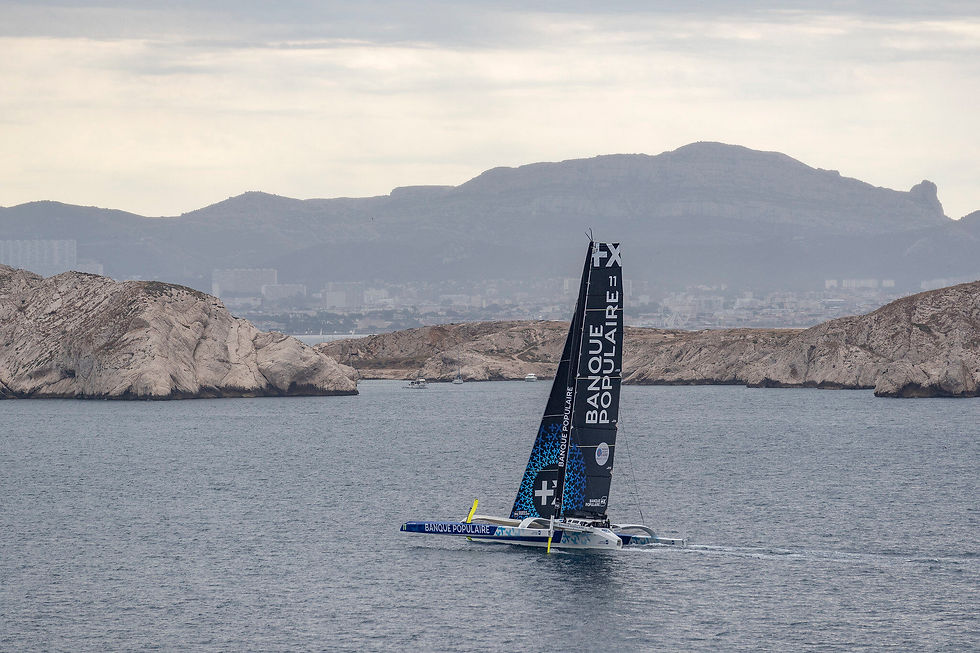
The number one priority for skippers is the technical preparation of their boats to get the best performance right from the start. In the Ultim class, SVR-Lazartigue changed its foils and rudder this winter, while Banque Populaire had done so the previous year. "It's our usual timing; it allows us to thoroughly test the systems and gain a bit more perspective ," explains Armel. At MACSF, the refit took place this winter: "We modified the hull, tried to reduce weight, fitted new sails, and made a lot of small modifications that we don't really want to talk about ," details Corentin Horeau.
All classes are involved. Jean Le Cam spent countless hours working on his Swan 59 until its launch in early May. Charlie Capelle also gave his multihull, Acapella – Proludic – La Chaîne de l'Espoir, a major overhaul . "Last year, with my children and some family, we dismantled it from masthead to stern before putting everything back together ." Gilles Colubi also completely rebuilt the boat in the spring: "The mast was unstepped, the rigging was replaced, worn parts were replaced, the hull was sanded… There was a lot of work!" For amateur sailors, ensuring proper technical preparation is essential. "It's fundamental; if your boat isn't seaworthy, you won't get far!"
Navigate without counting
Once at sea, everyone's priority is sailing. "I go out at least twice a week," says Charlie Capelle. "It's incredibly important to put in nautical miles and check every technical aspect of the boat. So many problems can arise; it's best to identify them early in the season!" Guillaume Pirouelle agrees: "If you want to be comfortable in all conditions and not be caught unprepared when things get tough, the ideal is to be familiar with as many situations as possible ." The skipper competes in numerous races: the Spi Ouest-France with a crew, the Normandy Channel Race, the Trin40 (which he won), the Dhream Cup this summer…
The schedule is also packed for Corentin Horeau, who competed in the 1000 Race and will participate in the Vendée Arctique in June. "Each race allows you to gain experience and refine your knowledge of the boat ," explains the MACSF skipper. "They all contribute to the journey towards the Route du Rhum." For her part, Anne-Claire Le Berre competed in the two Acts organized by the Ocean Fifty class in Sainte-Maxime and Ajaccio in May. "It's always very difficult to put yourself in a racing situation when you're not actually racing ," the sailor points out. " It's important to generate the adrenaline of racing and to train by adding the pressure." In contrast, the Ultim class's racing program is lighter, with only the 24 Hours Ultim in September. "We did a round trip to the Caribbean in the spring and we recently completed a tour of the Mediterranean ," explains Armel.
Regaining automatic reflexes on your own
During the delivery trip to the Mediterranean, as well as during her qualification, Anne-Claire Le Berre "started working on the solo configuration" to "get the hang of pure solo sailing ." For many participants, solo experience is a rare commodity. Guillaume Pirouelle will be competing in his first transatlantic race in this format. "Sailing alone is much more demanding; the physical and mental aspects are much more important than sailing double-handed, and it's something I'm really trying to work on." In both Class40 and IMOCA, the season is more focused on solo races, which allows sailors to hone their reflexes on board alone. This is the case for Corentin Horeau: having only competed in double-handed or crewed races last year, he now only races solo (1000 Race, Vendée Arctique). "It allows us to rediscover our automatic reflexes in race conditions; it's incredibly enriching ," Corentin adds.
To improve one's athletic condition
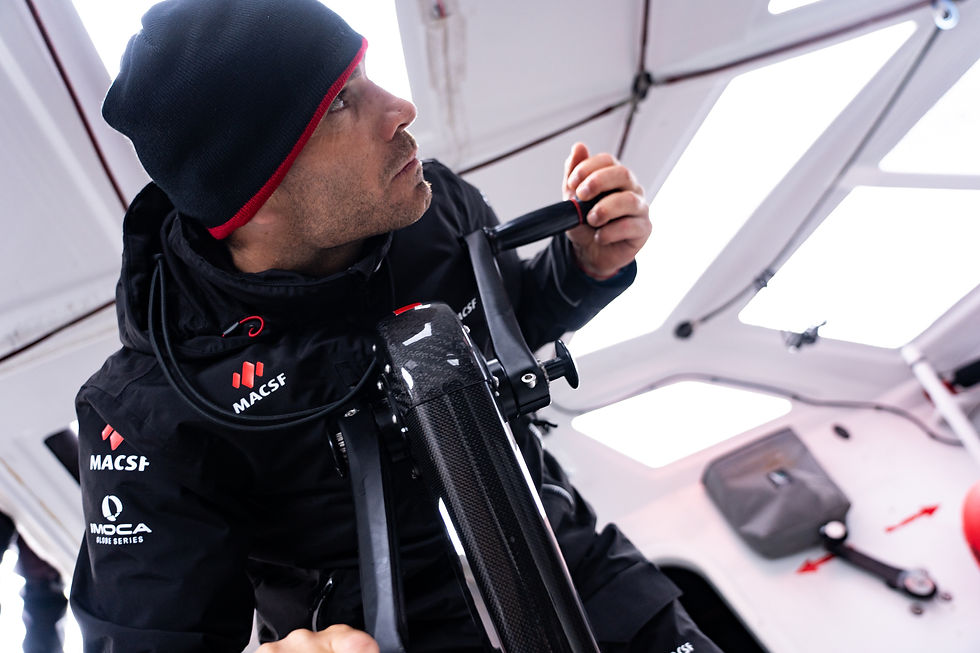
Between outings at sea, maintaining one's fitness is also essential. Outside of sailing weeks, Armel Le Cléac'h alternates between swimming, gym workouts, and running. "There's a significant physical demand aboard an Ultim; it's important to be in top shape to go the distance ," he asserts. The Banque Populaire skipper completed a "heavy training block" during the winter, as did Corentin Horeau. "With the start of the season, we have less time to go to the gym ," adds the MACSF skipper. He nevertheless trains whenever he can. Above all, "the preparation for working with the winch pedestal will need to be intensified ." The MACSF sailor will therefore "soon buy a pedestal to practice at home."
Outside of sailing weeks, Guillaume Pirouelle makes sure to do "three gym sessions, a bit of recreational sport (kiteboarding, running, cycling) without neglecting recovery, stretching, and yoga . " "You have to do cardio, core work, weight training, endurance... Basically, do a little bit of everything whenever I can," emphasizes Anne-Claire Le Berre. For his part, Gilles Colubi, who will soon be 67, goes for a brisk walk every morning, which is "three-quarters of an hour of brisk walking, almost running ." Charlie Capelle also sticks to two sessions a week: Pilates on Wednesdays and cycling on Thursdays. "But I lead a healthy life, I take care of my body and my diet ," continues Capelle, whose wife "encourages me to get a lot of checkups to make sure I'm in good shape."
Don't neglect the mental approach to the race
Feeling good in their boat, good in their body, and… good in their mind. They are all well aware of the need for, as the saying goes, “a sound mind in a sound body” (“anima sana in corpore sano” in Latin). Mental preparation is essential to face all the challenges of the Route du Rhum-Destination Guadeloupe. It's necessary to cope with repeated exertion, sometimes extreme conditions, and often a very advanced state of fatigue. Anne-Claire Le Berre collaborates with Alexis Landet, a former judoka who works with several skippers. “These are very complex projects that have to be managed alongside personal life,” the sailor explains. “Alexis gives me tools to stay focused .” Corentin Horeau also emphasizes the need to “manage everything through coordination and the distribution of tasks among each team member .” Furthermore, he reminds everyone of the importance of pacing themselves to avoid burnout during the preparation.
His method? "Knowing how to step back and remembering that you can never win every battle ," he smiles. "I'd like to think about nothing else, but it takes a lot of energy and it can be difficult for those around me," admits Charlie Capelle. " My wife makes me take a break, and she's right!"
More broadly, the mental aspect is "a process that takes years, where experience plays a crucial role," adds Guillaume Pirouelle. " You have to be able to identify problems as quickly as possible, feel comfortable on board, and remember that every decision will be made alone." Armel Le Cléac'h puts it this way: "Solo offshore racing taught me to manage my emotions and prioritize in difficult situations ." For amateur skippers, the approach is different: "I don't have any pressure from my sponsor, my family, or anyone around me ," says Gilles Colubi with a smile. "Until the start, I want to be as calm as possible ." After that, it will inevitably be a different story. "The racer takes over from the cautious man, and you have to give it your all to reach the other side!"
© Nicolas Prado